
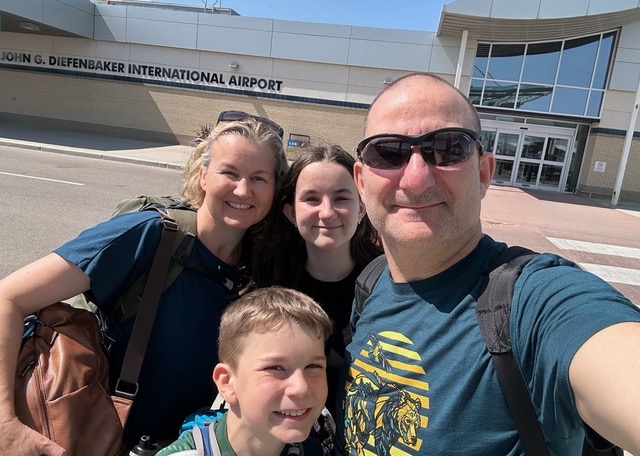

This was a fantastic day trip, although we were frustrated that they could not give us a more specific time for pick up. We waited for 30 minutes in very hot sun at the gate of our complex. The 1 hour travel time to the rescue was was made more interesting by a couple who had spent the last 12 years teaching in Brunei, the wife Steph was from Holland, and her husband was originally from Sardinia Italy. They met in Britain; he sounded quite British. They both loved to chat and entertained us for the entire journey with antidotes about their life and travels.
Our experience at the Wildlife Friends Foundation (WFF) began with an informative video about the harm that is coming to animals in the illegal animal trade, the tourist industry, and wild animals that are personal pets when young and cute, but can no longer be kept as they grow. They shared many disturbing images where wild animals kept on short chains so that they can perform or be pictured with tourist. There was a lot of information about elephants and their use in the trekking, logging, and the construction industry. This practice was shut down by the Thai government around 1989. At this time many Elephants were released on to the street with beggars, put into animal shows, or trained to be ridden, (which is not good for them). We learned terrible stories of amazing birds having their wings, clipped. Gibbons being taken into captivity at very young ages or being bred in captivity, thus not having the skills to live on their own. Stories of lizards and tortoises being kept as pets and then abandoned in the streets when they grow too large and are no longer wanted. The zoo in Phuket, reportedly kept their animals in very small cages, the WFF approached them about taking their animals into care, but they initially turned down the offer. Then during Covid, with no paying customers, the zoo them with a request to take their animals. This included eleven tigers and at least three bears from very small cages, and many other animals. The chimpanzee Canoe lived in a tiny cage in front of a schoolyard for over 30 years, when Covid came he was allowed to be adopted by The Foundation because his owner could no longer afford to feed him. Canoe now lives on a big Island with lots of climbing structures, fresh water and some semblance of jungle, efforts to plant trees have been hampered by his tendency to pull them up as they beginning to establish roots. The centre has a large staff, but also relies on an extensive group of volunteers, many are foreign young adults (you must be 18) sign up for weeks or months, you pay a small stipend that decreases a you spend more weeks, this covers your own room and board. It looked like an amazing experience and Sophie definitely seemed interested.


The tour was split into several parts throughout the day. We began by walking through the Gibbon Forest, then toured on a Safari truck bus, stope to walk near the bear and tiger enclosures. At the end of the tour a major highlight was seeing the different elephants, we then got to feed an elephant with huge cubes watermelon.
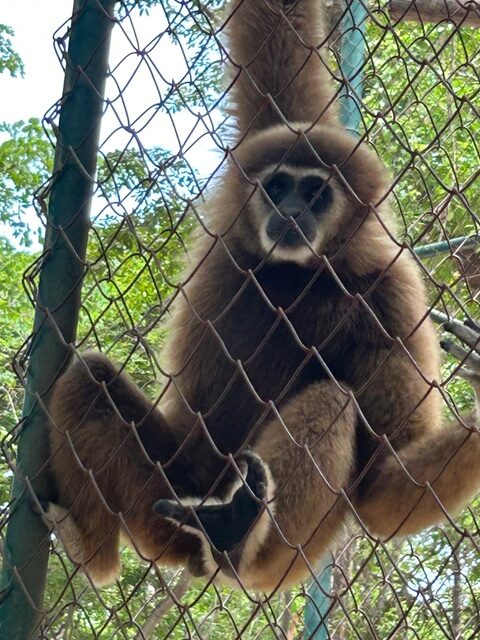
Our Dutch Guide who would have been in his mid to late 70s, had been volunteering at WFF for over 20 years. He had a wealth of information about each of the animals, he knew most of their names and backs story’s. The Foundation’s mission is to rehabilitating as many animals as possible, with the possibility of returning them to the wild within a nation park where they would be protected. Unfortunately, they estimate it will only be possible for around 5% of the animals because many of them have lost the skills they need to survive, they have never been socialized with their own species or have they serious physical or mental disability that would prevent them from surviving. For this 95% of rescued animals they now to provide safe environments, trying to provide the most natural form of life possible. There were some very interesting animal enclosures, particularly the islands for Gibbons, clearly they were doing as much as they could to replicate the natural environment.


The land for the Gibbon Forest had been donated by the local Buddhist monastery on condition that the local heard of Sambar deer could continue to wander freely. The large Gibbon cages, many connected but caged tunnels so the Gibbons could visit friends and family. Gibbons are Apes, not Monkeys, thus have no tails. They are usually very difficult to see in the wild. Gibbons are monogamous and mate for life, we learned about attempts by WWF trying to couple up a few of the Gibbons, some attempt successful and some weren’t. One couple gave us an amazing and loud display of the typical Gibbon duet (ask me to see the video if you would like). A family of Gibbons was now living almost completely independently (except for food being delivered twice a day) on an island found within the large property.
We also met several different species of monkeys with sad stories. One of the had lost an arm due to the Bear in the next cage, when it attempted to groom the bear, another had been electrocuted and lost an arm. A cute Squirrel money was living peacefully with a large Iguana. We met an Australian Cassowary (largest flightless bird, large black body, blue head with large scale on top of its head- see google image in my gallery as well as our image) named Enzo (No one knows how he ended up in Thailand); for years his previous owner had used him to collect monetary offerings in front of a temple before releasing him into the streets of Hua Hin to fend for himself. Luckily when someone called the police about a “dinosaur” in their garden they had been able to contact WWF. Enzo now has a safe home, with regular food and lots of space. Our pictures do not do justice to the great Hornbills, hopefully we will be lucky enough to see them in the wild when we visit one of the Thai National Parks. Although we visited a number of different large Tiger enclosures, and saw the new one currently in production, the hot day meant we only saw one Tiger and one leopard as the other large cats were hiding in their dens.


Our guide timed our tour to visit the bears, Sun bears and Adriatic bears close to feeding time when they would be locked in their smaller pens (where we could see them well) while volunteers hid food all over their large enclosures, throwing some of it into trees and up on climbing structures.


